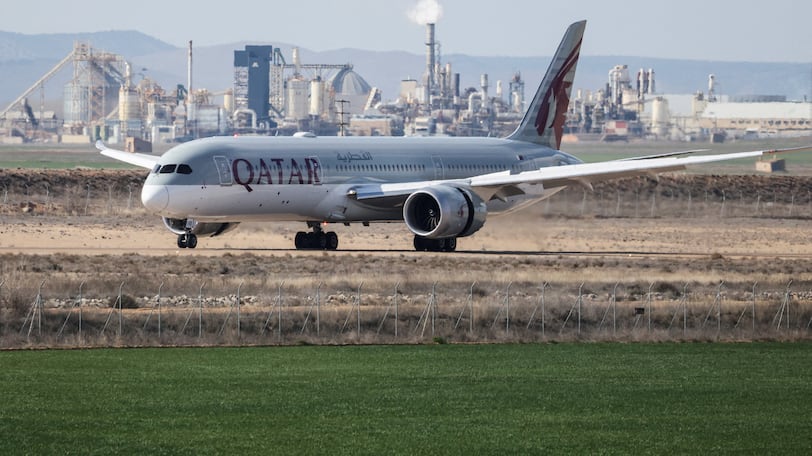
Global air passenger demand fell 3.4% year-on-year in April 2026 — its first decline since the post-pandemic recovery — entirely attributable to the collapse in Middle East traffic, according to data released Friday by the International Air Transport Association (IATA). Excluding the Middle East, global demand would have risen 1.2%.
Background
The Iran conflict's disruption of Gulf airspace and jet fuel supply chains has reshaped the economics of international aviation with unusual speed. Gulf carriers — Emirates, Etihad, and Qatar Airways — operate some of the world's highest-traffic long-haul hub networks, connecting Asia-Pacific, Europe, Africa, and the Americas through Abu Dhabi, Dubai, and Doha. Their simultaneous capacity cuts in April created a demand void that no other region could offset.
Jet fuel costs more than doubled in April as Gulf energy exports were disrupted. Aviation fuel exports from five Gulf states collapsed to approximately 127,000 barrels per day in March, down from 605,000 barrels a day a year earlier — a 79% drop. Airlines absorbing those fuel costs while simultaneously canceling or rerouting long-haul services saw revenue and margin compress simultaneously.
Key Numbers
- Global air passenger demand (April 2026): −3.4% year-on-year
- Middle East demand: −46.6% (worst of any region globally)
- Middle East capacity: −46.3%
- Middle East load factor: 74.9% (slight uptick despite volume collapse)
- Global demand ex-Middle East: +1.2% (all other regions in growth)
- Regional leaders: Latin America +13.9% | Asia-Pacific +5.6% | Europe +4.9% | North America +0.5%
Industry Context
IATA Director General Willie Walsh described the Middle East decline as "so acute that it dragged overall demand down," marking the first time since 2022 that the global industry posted a monthly contraction. Walsh warned that high fuel costs will persist even after demand stabilizes, with forward schedules showing reduced capacity for months ahead — a lag that reflects aircraft repositioning, crew scheduling, and commercial agreement complexities that take quarters, not weeks, to unwind.
What It Means for Investors
Aviation-adjacent investments across the Gulf — airport operators, ground handlers, duty-free operators, hospitality companies reliant on transit passengers — all face a prolonged period of compressed throughput. Connectivity between Gulf financial hubs and global capital markets is also impaired: investor travel and in-person deal activity in Dubai, Abu Dhabi, and Riyadh slowed materially in April, with forward bookings suggesting a slow recovery into Q3 at best.
For investors tracking Gulf-listed aviation and hospitality stocks, the pace of airspace normalization following any ceasefire — rather than the ceasefire itself — is the key operational variable to model.
What to Watch
IATA's May traffic data, expected in late June, will be the first test of whether the worst has passed. Any confirmed Hormuz ceasefire before month-end could trigger a partial capacity restoration before that data prints. Airlines' June schedule filings — visible on booking platforms — offer an earlier, if imperfect, signal of management confidence in a return to normal operations.