French borrowing costs hit a 24-year high
The yield on France's 10-year government bond rose above 5% on Friday 23 October, a level it first reached on Wednesday 21 October for the first time since 2002. The spread over German Bunds stood above 170 basis points. The 30-year yield was 5.5%, 184 basis points above its German equivalent, and five-year credit default swaps rose above 100 basis points on Thursday, the first time since October 2012.
Budget deadlock and the rating
Parliament remains split on next year's budget, which includes 43 billion euros of spending cuts and revenue measures, and the government lacks a majority. On Friday evening Moody's kept France at Aa3 with a negative outlook; S&P and Fitch rate the country one notch lower. Debt stands at 119.1% of GDP, and debt-servicing costs are expected to rise by more than 10 billion euros in 2027. Unions have called for a large mobilisation on 5 November.
The ECB is boxed in
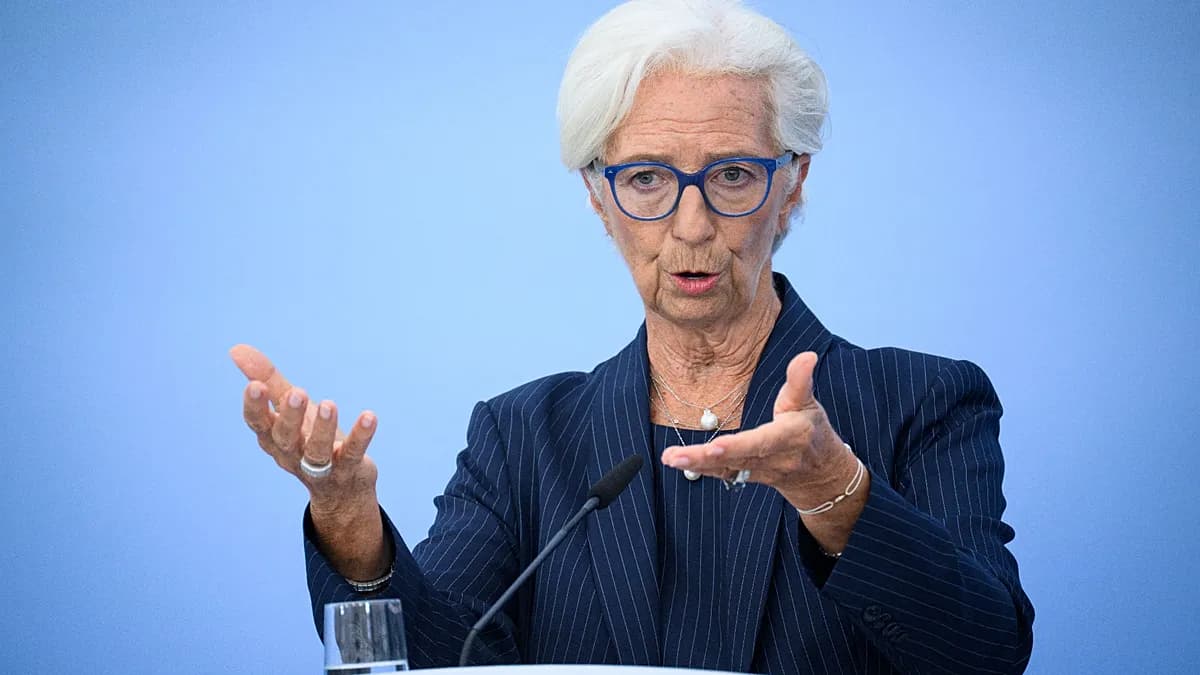
The European Central Bank meets next week and is widely expected to hold. It has raised rates twice this year, taking the deposit rate to 2.5%, and euro-zone inflation was 3.8% in September on higher energy prices. ECB President Christine Lagarde, speaking at the IMF and World Bank meetings in Bangkok, said the main solution lies in French fiscal policy rather than an ECB rescue. Banque de France Governor Emmanuel Moulin said last Friday that the conditions for ECB intervention were not met.
The ECB's Transmission Protection Instrument, created in 2022 and never used, requires compliance with EU fiscal rules, which France currently does not meet. The alternative, Outright Monetary Transactions, requires an ESM programme.
ING's Carsten Brzeski said the bond market has "taken over the ECB's job". He estimates that higher German yields tighten financial conditions like a 25 basis point hike and French yields like about 50 basis points, and he expects the ECB to wait for its December staff forecasts before moving again.
Growth is softening too
The 23 October flash PMI pointed the same way: the HCOB euro-zone composite index fell to 51.9 from 53.1, below the 52.7 consensus, with manufacturing at 52.4 (previous 52.9) and services at 51.7 (previous 53). S&P Global's Chris Williamson said the reading is consistent with GDP growing at a 0.3% quarterly pace, below September but among the better performances of the past three years.
What it means for investors
For Middle East investors holding euro-denominated assets or European bank and sovereign exposure, the French bond market is a barometer of euro-area fiscal risk. With inflation at 3.8% and growth slowing, the ECB has little room to cushion a sell-off, which also helps keep global bond yields elevated.
What to watch
The ECB meeting next week, expected on 29 October, and any comment on bond-market conditions.
Whether the French budget passes without a government majority.
Further rating actions from S&P and Fitch.